
The Current
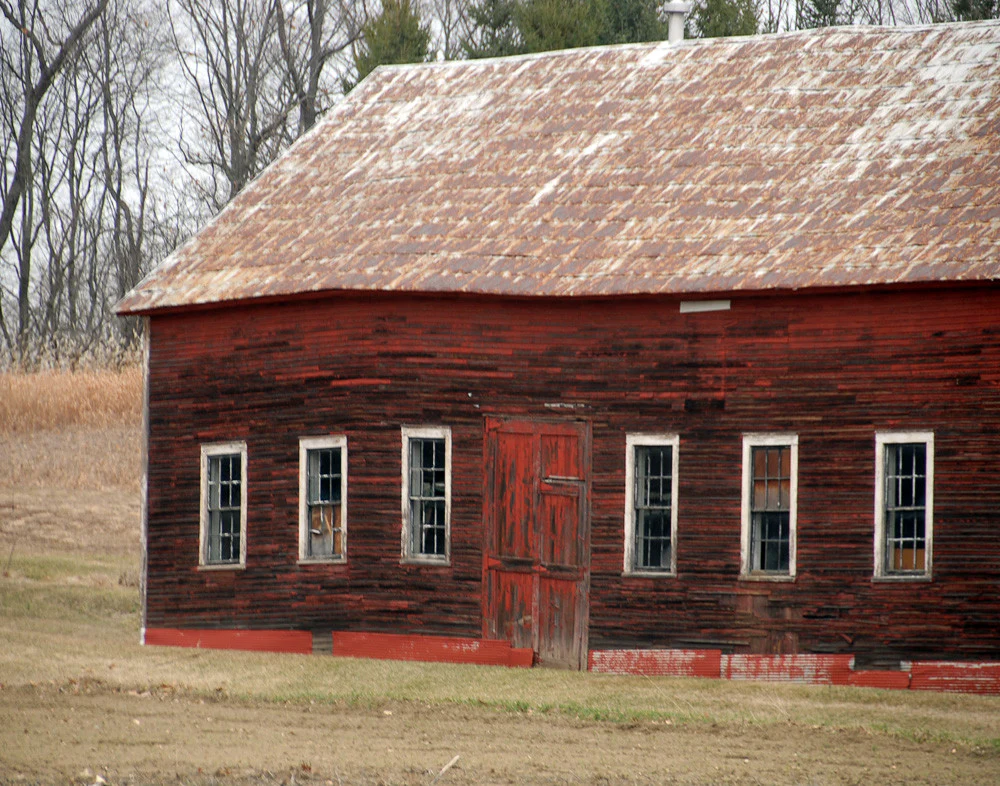
Barns in New England are red because the universe is 14 billion years old.
Direction Without Intention
The “because” there is what I’ve come to call the current.
This isn’t fate. Nor God. It’s not a narrative arc, a satisfying sense that things happen for a reason, that suffering is meaningful, that history is building toward something. I don’t find those frames appealing, though I understand they can be comforting and even inspirational.
The current is something else. It has direction without intention. It is ineluctable without predetermining every detail. It encompasses everything and observes nothing.
The universe has a direction. Toward entropy. Toward complexity. Toward galaxy formation and stellar death, and eventually the iron oxide on the side of a barn next to the bike path in Hadley, Massachussets. This direction doesn’t require anyone to have intended it, any more than water intends to flow downhill. Water just does. The universe just does.
The river has banks — it doesn’t have a plan. The laws of physics constrain what can happen without specifying what will. This is the crucial distinction between constraint and determinism.
There’s no observation deck. The current runs through the thing doing the describing. It is non-dual
We Are In It
I keep trying to visualize myself standing standing knee-deep in the current, ready to skip some stones. This puts me in the universe, but also separate from it. A self that observes reality without being constituted by it. A mind that reasons about the universe from some neutral vantage point.
This is an illusion, though as George Box said, it’s still sometimes useful.
We are made of the same processes we’re trying to describe. The calcium in your bones was forged in the cores of stars that died before the sun formed. The iron in your blood was scattered across the galaxy by a supernova before it fell into the dust cloud that became our solar system. You are — not metaphorically but literally — made of stars. The atoms that constitute your hand right now have been inside other stars, inside other planets, inside other organisms. They were not made for you. They are passing through.
So are you.
We are expressions of the same universe we’re trying to understand. We’re not knee-deep in the river. We’re part of the river. We couldn’t get out if we tried.
The Physics of Eddies
The image I keep returning to: a self is a temporary eddy in a flow that long preceded it and will long outlast it.
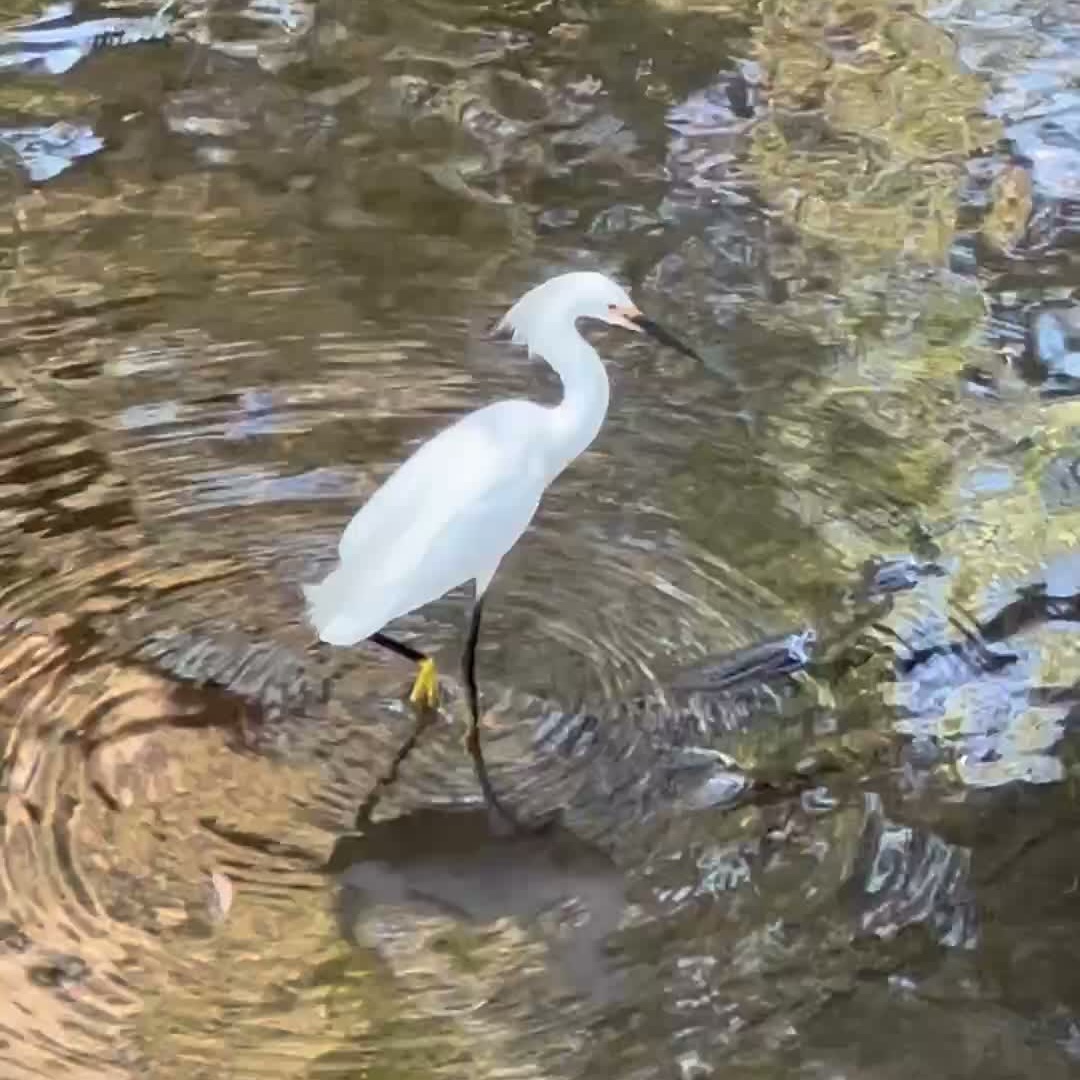
Ilya Prigogine won the Nobel Prize in Chemistry in 1977 for work on what he called dissipative structures — physical systems that maintain organized patterns not despite being open to their environment but because they are. A whirlpool isn’t a thing; it’s a process. It maintains its shape by continuously consuming the river. Stop the flow, the whirlpool disappears.
Order is a local, temporary negotiation with entropy.
The biologists Humberto Maturana and Francisco Varela extended this idea to living systems with their concept of autopoiesis — self-making. An organism doesn’t resist its environment; it processes it. The eddy maintains itself by engaging the river. Life is not threatened by entropy. Life is a process that entropy runs through.
An eddy lasts as long as conditions sustain it — growing when the current feeds it, shifting when it changes, dissolving back into the river from which it was never truly separate. It doesn’t leave the flow. It was always the flow, briefly organized.
Ikkyu
The monk Ikkyu, 15th-century Japan, wrote:
The moon is a house
In which the mind is master.
Look very closely:
Only impermanence lasts.
This floating world, too, will pass.
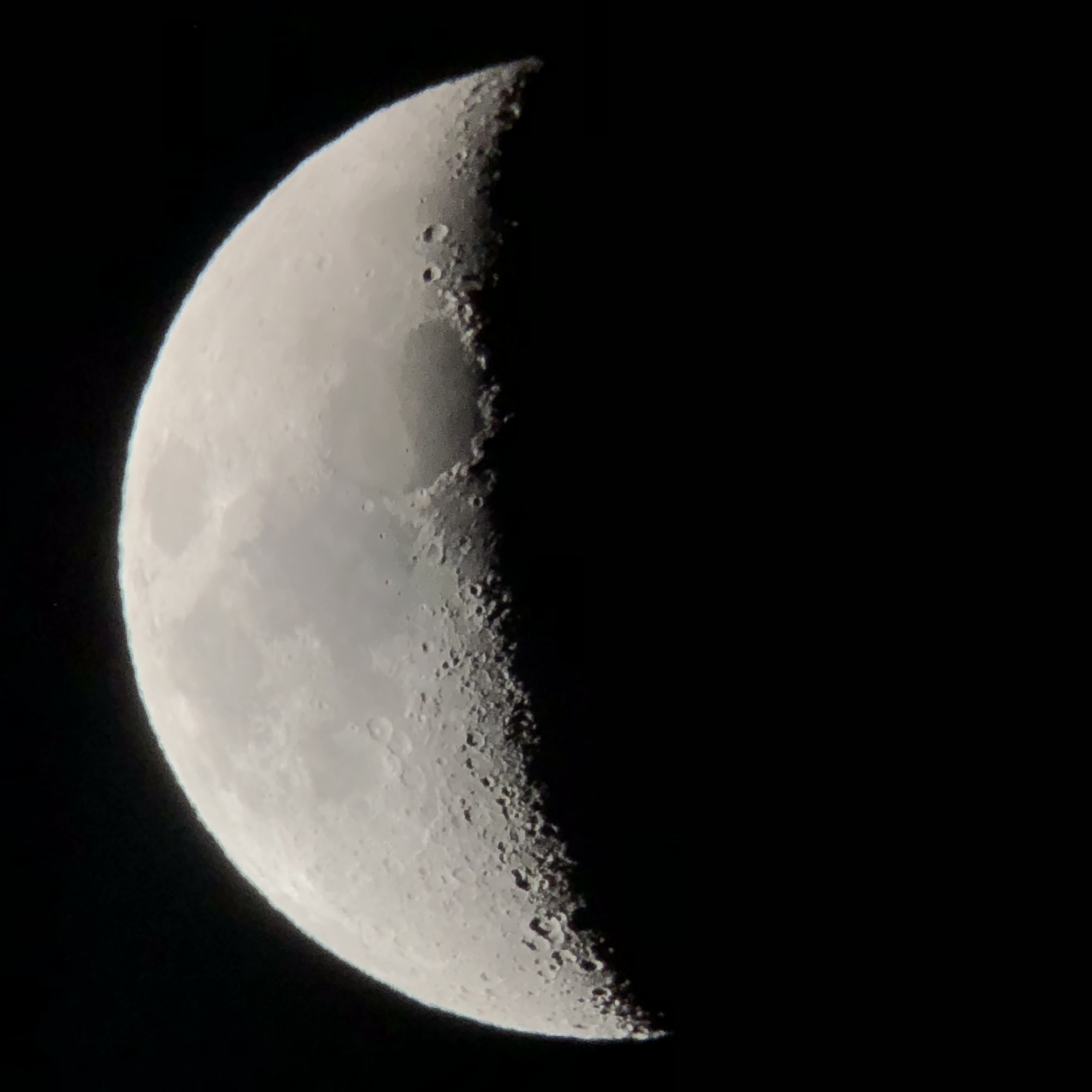
Only impermanence lasts. This is either devastating or liberating, depending on where you’re coming from.
Ikkyu says, floating world. Not collapsing world, not empty world — floating. Things move through, drift past, don’t stay. That’s different from not mattering.
Hume saw something like this clearly: strip away the fiction of permanent, intrinsic meaning and what remains isn’t nothing. What remains is the only meaning there is. The whirlpool matters to the fish that lives in it. The eddy matters to everything that formed inside it. The self is real; it’s just neither permanent nor separate.
The question isn’t whether you matter. The question is what you’re building your sense of mattering on. If it’s on permanence, you’re in trouble. Permanence isn’t available. But if it’s on continuity — on being part of something that flows — you have something to work with.
The Ethics of Eddies
What I take from this:
Find joy in the eddy. You’re here, in this particular shape, now. The current made you possible and for the moment sustains you. Gratitude for the temporary is still gratitude. The joy available to an eddy is real joy.
Ease the suffering of other eddies where you can. Everyone around you formed under conditions they didn’t choose, and will dissolve when the river moves on. Their suffering is as real as yours, and as transient. Reducing it matters — not because it lasts, but because it’s happening now.
The third is harder to see but I think it’s the most important. Humanity is also a dissipative structure — a collective eddy that maintains itself by processing the world, that can grow more complex or collapse, and that depends on throughput for its coherence. Every person who gets to live inside it long enough to notice the current — to feel the wonder of the barn sentence, to sit with Ikkyu — is a person who might act from that understanding. That, to me, is worth protecting.
The Barn, Up Close
Let us step off the bike path and examine this red barn in detail.
In the early universe, only hydrogen and helium existed. Heavier elements — carbon, oxygen, iron — are forged in the cores of massive stars through nuclear fusion, over millions of years. When those stars exhaust their fuel, they collapse and then explode as supernovae, scattering the heavy elements they made across the galaxy.
Our sun is a third-generation (Population I) star, and our solar system is composed of the cumulative output of the two prior generations. Iron, specifically Fe2O3, is abundant in Earth’s crust and one of the more accessible pigments. It happens to be red.
But rusty metal sitting in the ground makes neither paint nor barn. For the barn to exist, you need a particular kind of land use — and for that, you need a particular kind of economy.
Before European settlement, the Nipmuc and their neighbors had been tending this land for thousands of years. They preserved food through drying, smoking, caching in the earth. They moved with the seasons. Their relationship to livestock was different; their need to concentrate and shelter accumulated capital in a permanent structure was not the same. The barn is not a universal solution to winter. It is the solution of a specific culture with a specific theory of ownership — one in which a farmer’s wealth could be measured in animals and grain, and in which losing them to cold or rot was a financial catastrophe, not just a hardship.
That culture arrived here and imposed its geometry on the land: fields cleared, animals enclosed, structures built to hold what the market economy had made worth holding.
Then came the question of rot. New England winters are not theoretical. Wood exposed to that freeze-thaw cycle degrades fast, and a rotting barn is a ruined investment. Farmers needed something cheap to protect the wood. Iron-rich minerals were cheap: a byproduct of other processes. They sealed the wood, slowed the rot, and the color they left behind happened to be red.
No one chose red. Red chose itself, at the intersection of stellar physics, glacial geography, colonial land tenure, agricultural capitalism, and the specific cruelty of a Massachusetts February.
The universe had to be this old, and this large, for iron to exist. The continent had to be colonized in a particular way, by people carrying a particular idea of property, for a barn to be worth painting. The winter had to be cold enough to make the cost of paint feel smaller than the cost of losing everything inside it.
Every red barn holds the stories of all of this history. You just have to know how to read it.
The barn is in the current. The farmers were in the current. The Nipmuc before them were in the current. You are in the current. None of it was aimed here. All of it arrived and all of it will dissipate. I rather enjoy looking at it from my little eddy.
References and Further Reading
In this post
- Rose Eveleth, Barns Are Painted Red Because of the Physics of Dying Stars (2013)
- Humberto Maturana and Francisco Varela, Autopoiesis and Cognition (1980) — self-making as the definition of life
- Ikkyu Sōjun (一休宗純), 15th-century Rinzai Zen monk and poet
- Ilya Prigogine, Time, Dynamics, and Chaos (Nobel lecture, 1977) — the foundational work on dissipative structures
- Jennie Shurtleff, Food Preservation: Getting to the Root of It (2022)
- Plimoth Patuxet Museums, Growing Food
Going deeper
- Hampshire College, Our Living Land Acknowledgement — the eddy that is Hampshire College is dissipating, but had profound effect on its community
- Heraclitus — “You cannot step into the same river twice”; the pre-Socratic root of all these ideas
- Andrew Russell & Lee Vinsel, Innovation is Overvalued. Maintenance Often Matters More (2016) — the unglamorous argument that keeping things going matters more than making things new
- Seven generation sustainability — the Haudenosaunee principle that decisions should consider their effect seven generations forward; a different culture’s answer to the ethics of eddies
- The Spiritual Naturalist Society, Positive Nihilism
- Tao Te Ching, especially chapters 8 and 16
- Waking Up — my current favorite place to explore meditation, mindfulness, presence, and nondualism
- Alfred North Whitehead, Process and Reality (1929) — the philosophical backbone: reality as processes, not substances